
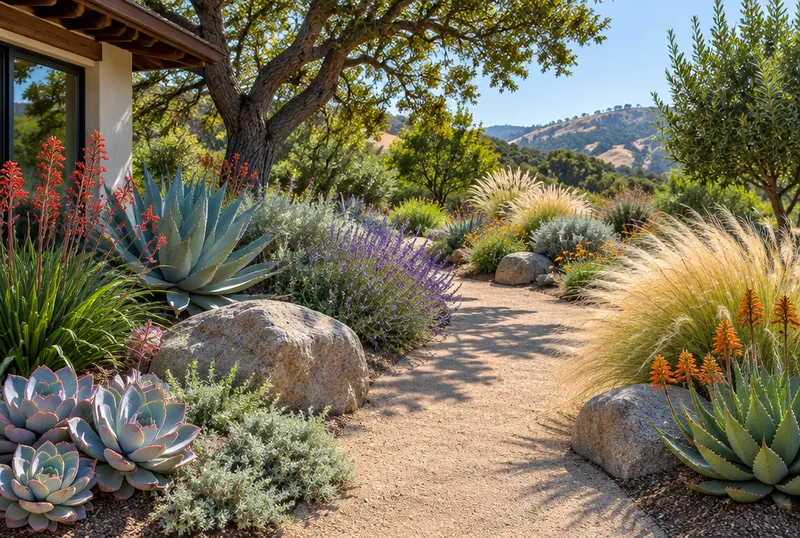
Drought-tolerant landscape design in Paso Robles means planning for hot, dry summers, variable soils and cool wet winters, without giving up beauty. This guide covers the layers of a water-wise yard, from soil and plants to irrigation and fire-conscious spacing.
What drought-tolerant really means
A drought-tolerant landscape is not a gravel yard. It is a design that uses plants adapted to dry summers, places them by water need, and delivers water efficiently so the yard looks healthy on far less irrigation. Most plants still need regular water for the first one to two years while roots establish.
Done well, a water-wise garden has structure, color across the seasons, and texture. The design choices, such as plant grouping, mulch and edging, matter as much as the plant list.
Start with soil, slope and microclimate
North County properties can range from heavy clay to sandy loam to rocky slopes, often within one yard. Clay holds water and drains slowly; sandy soil drains fast and dries out. Both can be improved with grading, amendments where appropriate and the right plants for each pocket.
Microclimates matter too. West-facing walls and paved areas reflect heat, while low areas can hold cold air or moisture in winter. Mapping these before planting lets you place the toughest plants where conditions are hardest. Slopes should be planted and graded to slow runoff so rain soaks in rather than leaving.
Layer plants by size and water need
Think in layers: trees for structure and shade, large shrubs for screening, mid-size perennials and grasses for seasonal interest, and low groundcovers to cover soil. Many Mediterranean and California-native plants suit this region, including sages, manzanita, ceanothus and ornamental grasses, as well as succulents in sunny spots.
Group plants by water need, a practice called hydrozoning, so each irrigation zone serves similar plants. Keep thirstier plantings near the house and patio where they are enjoyed most, and let low-water plantings extend toward the edges. Our planting and garden design work follows this approach.
Irrigation that matches the design
Drip irrigation delivers water at the root zone with little loss to wind or evaporation, and it is the standard for beds and shrubs. Separate zones for sun, shade, trees and any remaining lawn allow each area to be tuned. A smart controller that adjusts to weather can reduce wasted watering, and annual checks catch leaks and clogged emitters early.
Good irrigation is designed alongside the plan, not added at the end. Our irrigation and landscape lighting service covers zoning, controllers and low-voltage lighting as part of one layout.
Mulch, grading and lawn alternatives
A layer of organic mulch keeps soil cooler, reduces evaporation and suppresses weeds. Keep it a few inches from trunks and stems. Grading that directs water to planting areas, with shallow basins around trees and shrubs, helps winter rain soak in and stay where plants can use it.
If you want a green area without mowing or watering, artificial turf is one option for play areas, pet runs and tight side yards. Keeping a smaller, well-placed lawn, or replacing it with groundcovers and stepping stones, are other approaches depending on how you use the space.
Fire-conscious planting and spacing
In much of the county, defensible space matters. Space shrubs and trees so fire cannot easily travel between them, keep low, well-watered plants close to structures, and remove dead material regularly. Hardscape such as patios, walkways and gravel bands can serve as buffers, and the right plant choices are lower in oils and resins near buildings.
Local requirements vary by property and jurisdiction, so check current guidance for your address. We design with these principles in mind and coordinate tree work with licensed specialists.
Care in the first years
Establishment is the critical period. Plan for regular deep watering that is gradually reduced over the first seasons, and expect some pruning and replacement as plants settle. A water-wise landscape is not maintenance-free, but the work is lighter and more predictable. Read how it fits a larger project in our whole-yard planning guide, or see our work in Paso Robles.
Frequently asked questions
Does a drought-tolerant yard need any water?
Yes. New plants usually need regular watering for the first one to two years while roots establish, and even mature plants benefit from occasional deep watering during long dry spells. The goal is much lower, more efficient use of water, delivered through drip irrigation and a well-planned design.
Will a water-wise landscape look dry or bare?
Not if it is designed with layers, texture and seasonal color. Mixing shrubs, perennials, grasses and groundcovers with mulch, stone and well-shaped beds creates fullness. Many drought-tolerant plants flower or color across seasons, and thoughtful spacing lets them look established as they mature.
Is artificial turf a good alternative to lawn?
It can be, for play areas, pet runs and spaces where grass struggles. It needs a proper base and drainage, and it gets warm in direct sun. Many owners combine a small section of turf with planting beds and hardscape rather than replacing the whole yard.
When is the best time to plant in the Paso Robles area?
Fall is often ideal, since cooler weather and winter rain help roots establish before summer heat. Early spring can also work. Planting in mid-summer is possible but requires much more careful watering, so timing is usually planned around the construction schedule.