
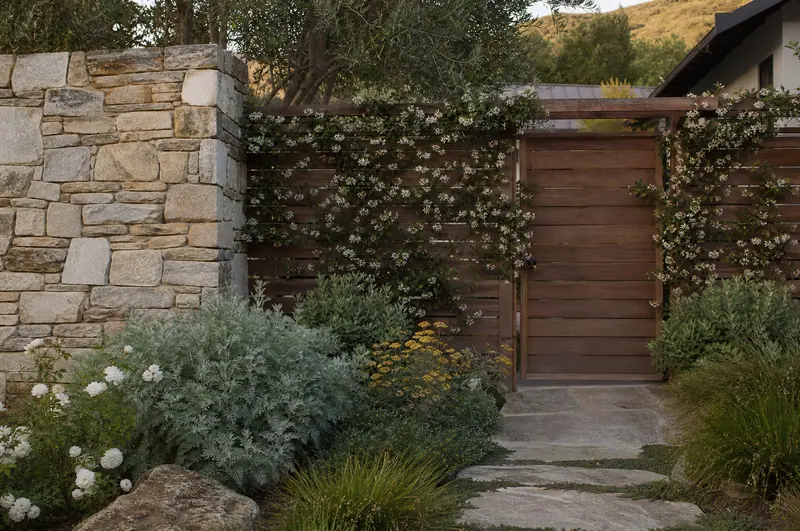
Garden walls and fencing in Paso Robles do more than mark a boundary. They shape rooms, hold soil, block wind and keep deer out of the planting. We build them as part of a complete whole-yard landscape, so every wall and fence supports the design around it.
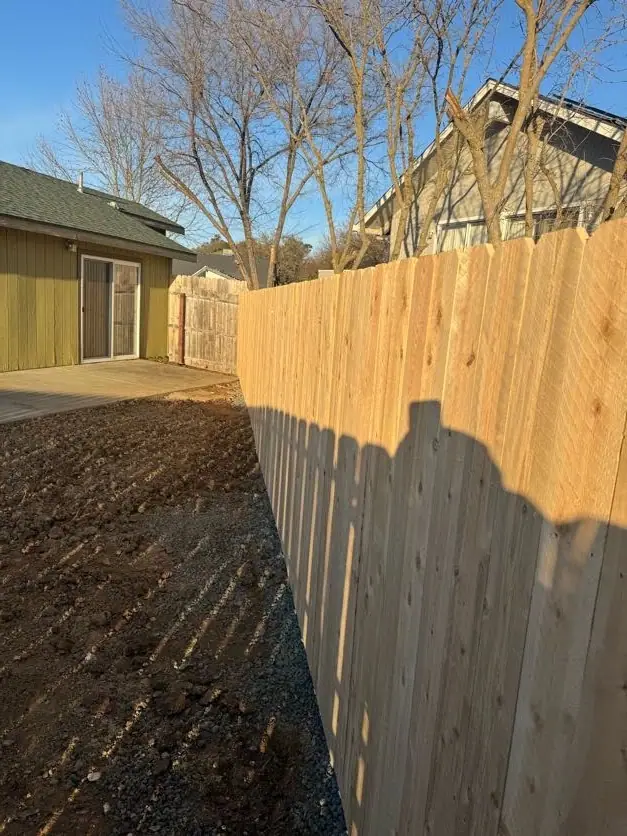
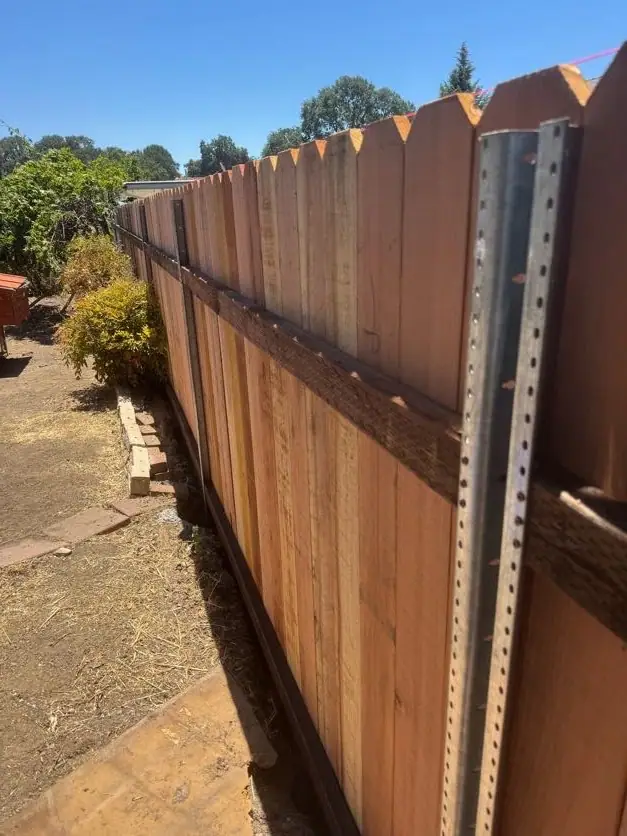
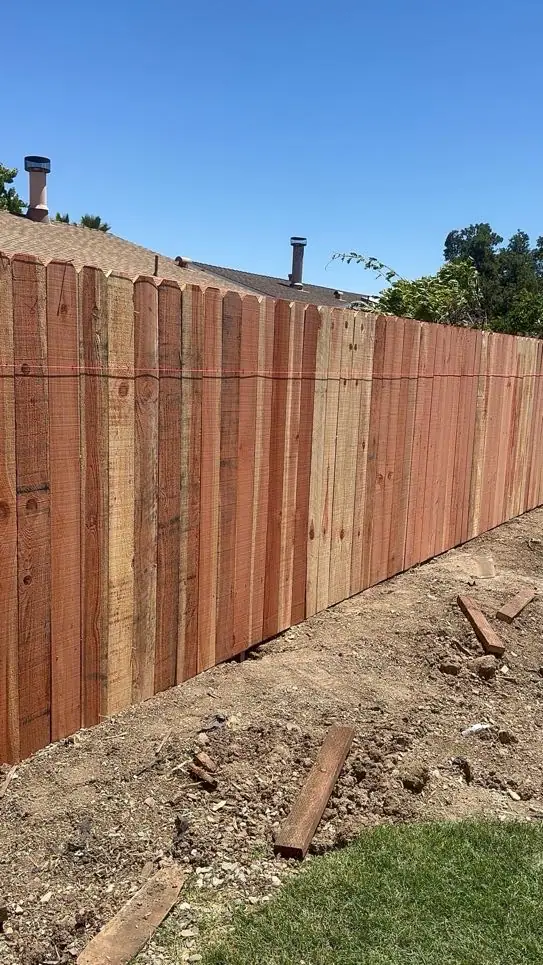

What is included in a wall and fence project
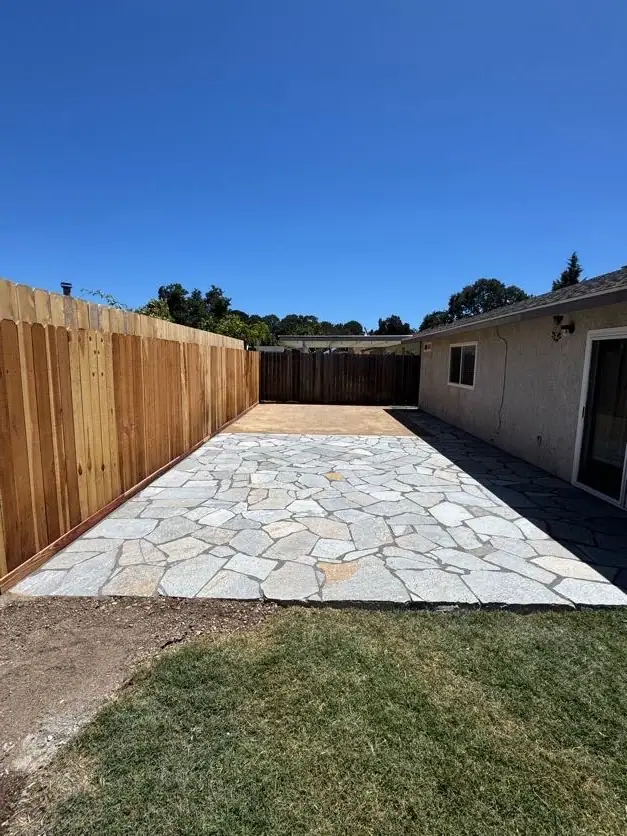
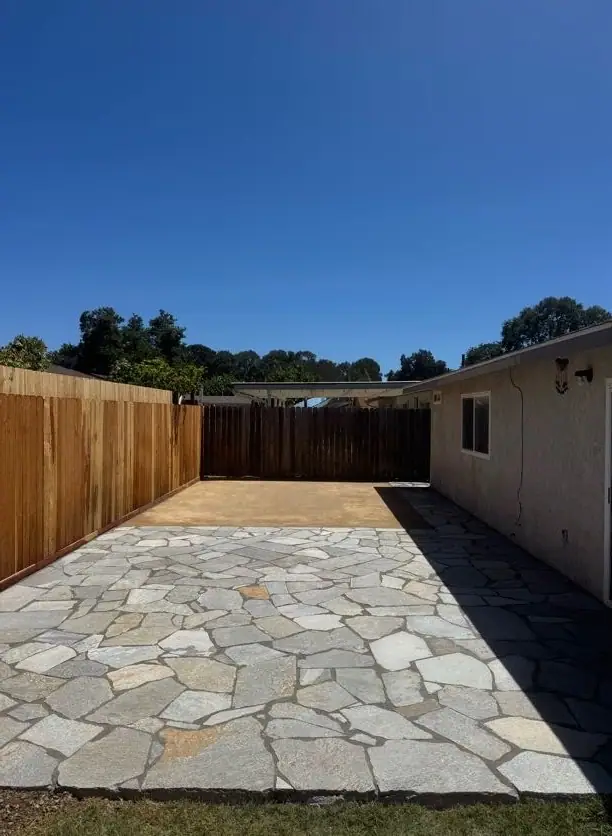
Within a total landscape project, we build freestanding garden walls, seat walls, planter walls, low landscape retaining walls, wood and landscape fencing, and gates. Layout, footings, drainage behind walls, finish materials and the connection to adjoining surfaces are planned together.
Taller or surcharged retaining walls are a different category. They may require engineering and a permit, and we coordinate with licensed specialists when a wall goes beyond a landscape scale. See our page on stone retaining walls for more.
Materials suited to the Central Coast
Material choice follows sun, soil, budget priorities and the character of the house. Many North County properties blend ranch, Mediterranean and contemporary styles, and the right material is the one that looks like it belongs.
- Natural stone or stone veneer over a masonry core for warm, lasting garden walls
- Stucco-finished block walls that echo the house
- Redwood or cedar fencing, often with horizontal slats for a cleaner look
- Metal or wire panels with posts for open views and deer control
- Cap stones and ledges that double as seating
Near the house, noncombustible materials are often a sensible choice in fire-prone areas.
Site prep, soil and drainage
Clay soil moves with the seasons, and water trapped behind a wall is the usual reason walls lean or crack. We excavate to firm ground, build compacted bases, include gravel backfill and drain lines where needed, and shape grades so runoff goes around the wall, not into it.
Fence posts are set to suit the soil, slope and wind exposure. Where oak roots are present, we shift post and footing locations to protect the trees instead of cutting through major roots.
Privacy, deer and wind
Fencing solves specific problems. Solid panels give privacy from a neighbor or road, taller open fencing keeps deer away from vegetable beds and new plantings, and a staggered or louvered design can soften wind across a patio. We talk through what the fence needs to do before choosing how it looks.
Pool barriers follow their own safety codes, and are coordinated with the pool contractor and applicable requirements. Powered or automatic gates need line-voltage electrical work, which we coordinate with licensed specialists.
Integration with the rest of the yard
Walls become the edges of a patio, the backdrop for an outdoor kitchen, or the seating around a fire feature. We plan lighting channels, irrigation sleeves and planting pockets before construction so features connect cleanly. Low-voltage fixtures can wash a stone face or mark a stair.
Care, durability and planning steps
Masonry walls need little beyond clearing debris from weep holes and checking drainage. Wood fencing weathers; a stain or sealer helps manage color and moisture, and regular inspection of posts and fasteners keeps it sound.
We begin with a site walk, discuss purpose and style, prepare a layout, and confirm height limits, setbacks and any HOA or permit needs. We help prepare documentation and coordinate, but approvals are never guaranteed.
Frequently asked questions
Do you build fences by themselves?
We build wood and landscape fencing as part of a total landscape project, tied to walls, planting, irrigation and other features. If fencing is your only need, contact us and we can discuss whether it fits our design-build approach.
Will my wall need a permit?
It depends on height, location and purpose. Low garden walls often have fewer requirements, while taller retaining walls may require engineering and a permit. We help prepare documentation and coordinate, and we cannot guarantee approvals.
What fencing keeps deer out?
Deer are often discouraged by taller, well-anchored fencing with no easy gaps. Open styles such as wire or slatted panels can protect planting beds while keeping views. The right height and design depend on the site.
How do you protect oak trees near a wall?
We adjust the alignment, avoid trenching through major roots, and keep grade changes away from trunks. If an arborist's input or tree work is needed, we coordinate with licensed tree specialists.