
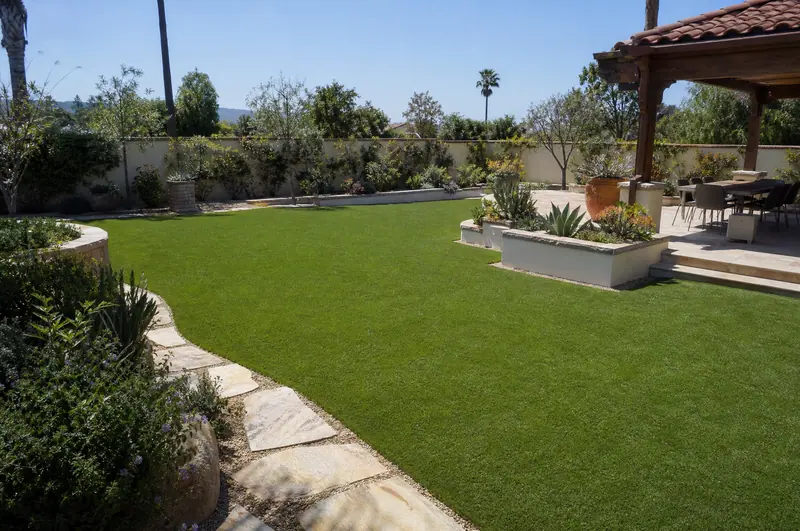
Artificial turf in Paso Robles can give you a green, usable lawn without regular mowing and watering, but only if the ground underneath is built correctly. We install turf as part of a complete design-build landscape project, with the base, drainage and edges planned from the start.
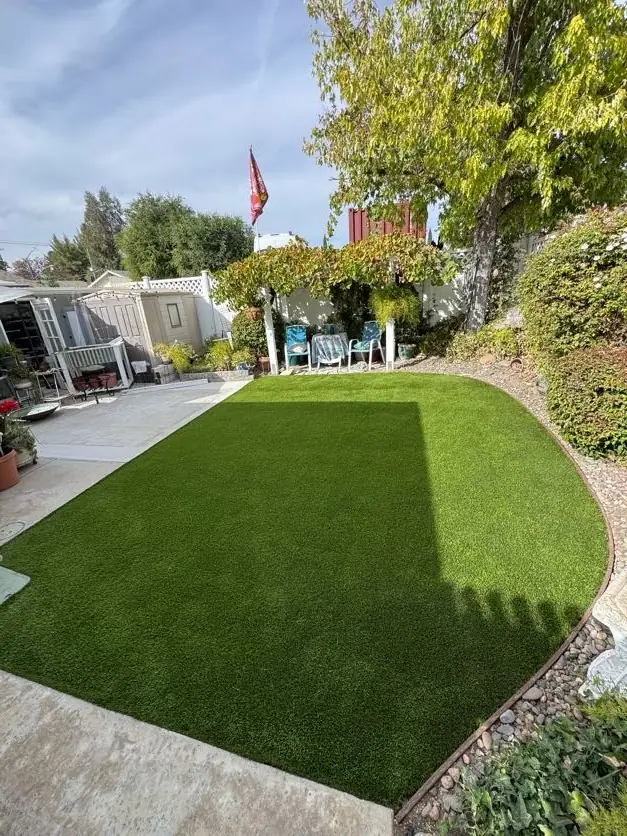
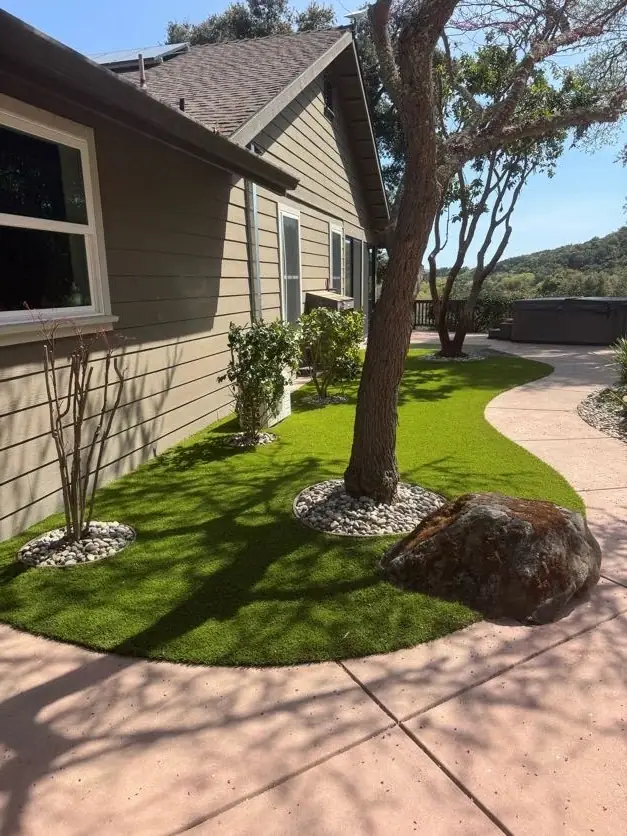

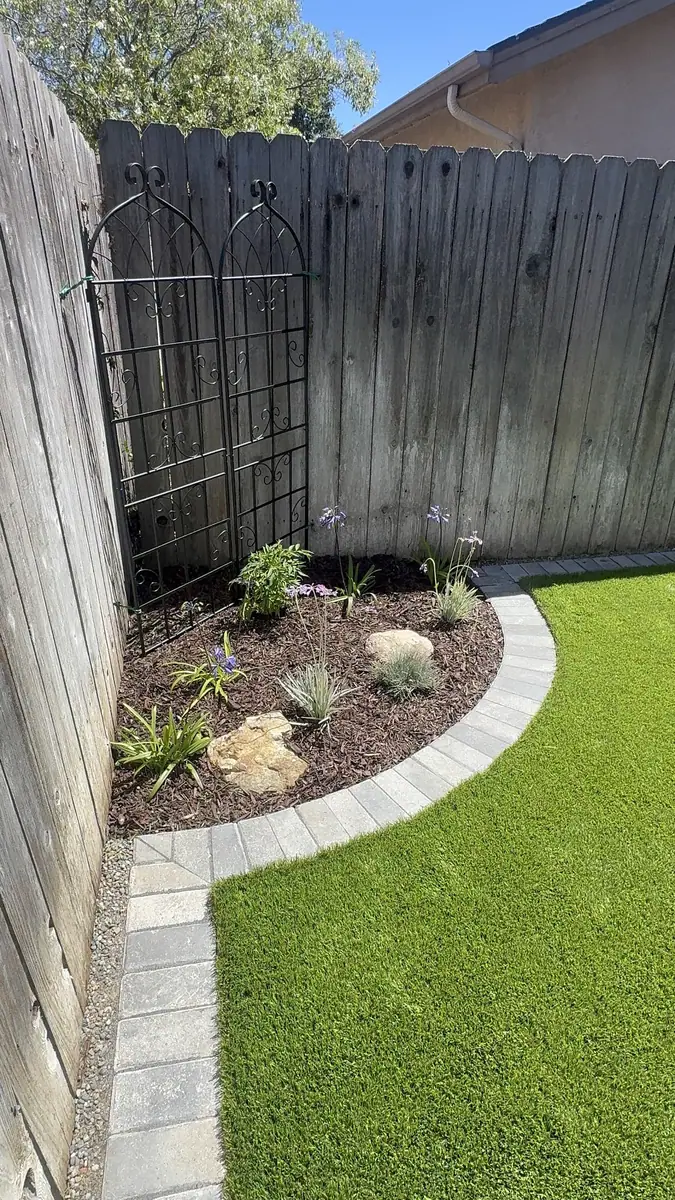

What is included in a turf installation
A turf project includes removing existing grass and soil to depth, grading for drainage, installing a compacted aggregate base, setting edging, laying and seaming the turf, securing the perimeter, and finishing with infill where the product calls for it. The sub-base makes the difference between turf that stays flat and drains, and turf that ripples or holds water.
Real sod is also available where you prefer natural grass, installed over a prepared base with matching irrigation.
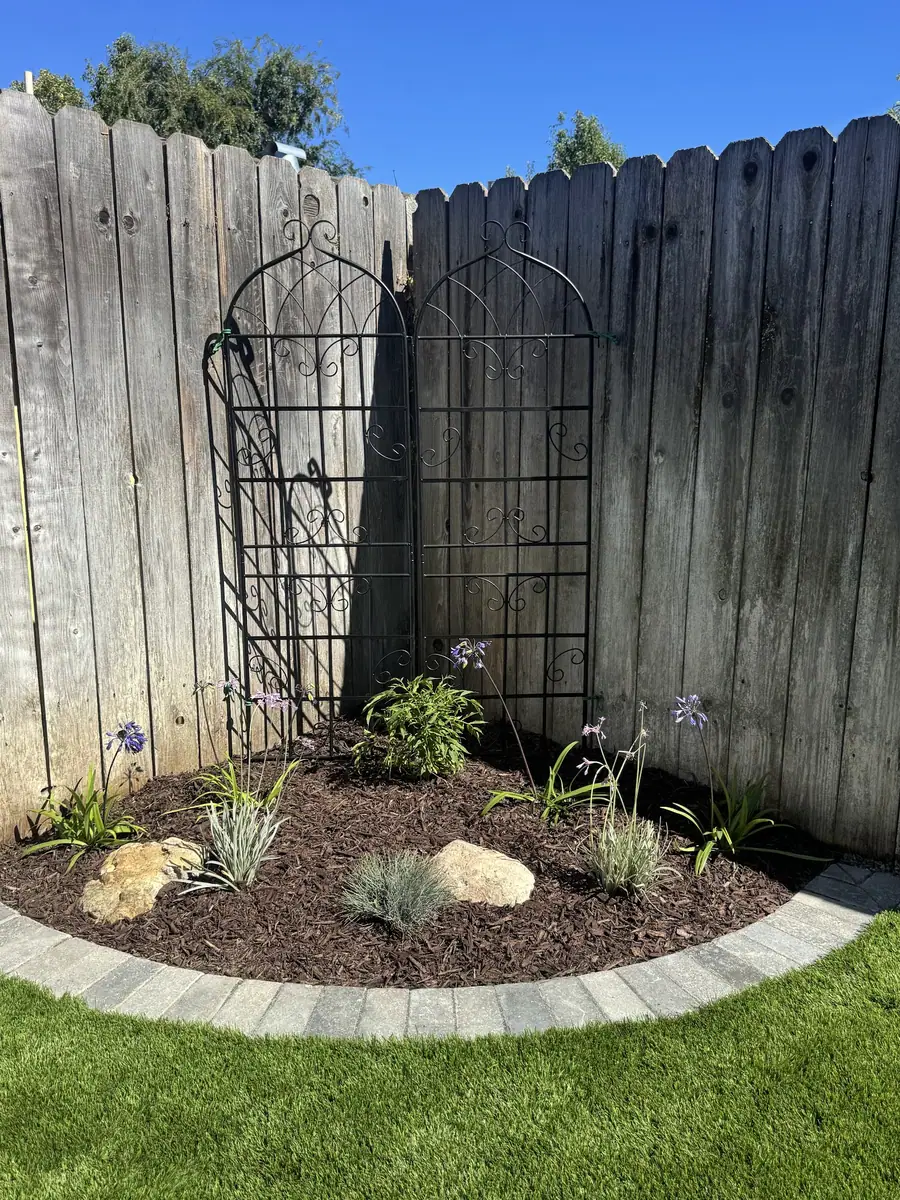
Edges are a design decision too. Concrete bands, pavers, steel or composite edging and planting borders each give a different look and level of durability, and we choose the edge that suits the use and the surrounding materials.
Base, drainage and clay soil
Clay soil drains slowly, so turf needs a drainage plan. We grade so water moves toward planted areas, drains or permeable edges, and build the base thick enough and compacted enough for the use. Large play or pet areas may need extra attention to drainage layers.
Where the turf sits near the house, we keep grade clear of foundations and weep screeds, and we do not direct runoff toward walls or neighbors.
Choosing turf for heat, pets and use
Turf products differ in pile height, blade shape, color blends and backing. The right choice depends on how the area is used.
- Pet areas: permeable backing and an infill that helps with odor management
- Play areas: slightly denser, shorter pile and a soft, level base
- Front yards: natural color blends and realistic texture
- Hot, sunny areas: lighter shades and shade from trees or structures help moderate surface heat
Synthetic turf can feel hot in full afternoon sun, so we plan shade and materials around that.
Oaks, edges and fire safety
Oak leaves and drop are common here, and they collect on turf. Planning for easy raking or blowing, and not excavating near oak roots, protects both the tree and the surface. Where roots are close, a lighter excavation or an alternative design is considered.
Turf is not fireproof, and some products can melt from reflected heat or embers. We keep it off tight against sun-reflecting glass and discuss fire-safe landscape layouts with you. Defensible-space guidance for your property should be confirmed locally.
Integration with the rest of the yard
Turf fits best framed by patios, concrete flatwork or pavers, with firm edges that keep it clean. Planting beds bordering the turf are served by separate drip irrigation zones, and any natural lawn areas are irrigated on their own. We can also design a mix of turf, planting and hardscape, rather than covering the whole yard.
Care, durability and planning steps
Turf needs less work than lawn but is not maintenance-free. Rinse off dust, remove debris, brush the fibers, and clean pet waste promptly. Over time, seams, edges and infill levels should be checked. Quality, use and sun exposure all affect how long it lasts, and the product manufacturer's guidance should be followed.
We begin with a site walk, review slope, drainage, shade and use, prepare a layout with edge details, and confirm the product with you before installation. HOA rules sometimes apply to turf, and we help prepare documentation without guaranteeing approvals.
Frequently asked questions
Does artificial turf drain well?
It can, when the base is built correctly. Permeable turf over compacted aggregate and a graded sub-base drains well, while poor preparation causes puddles. In clay soil, base design is especially important.
Will turf get too hot?
In direct summer sun, synthetic turf can feel warm. Lighter shades, shade from trees or structures, and rinsing the surface can help. We plan these conditions into the layout.
Is turf good for dogs?
Many owners use it for pets. A permeable backing, a suitable infill and prompt cleanup help control odor, and the base should drain freely.
Can turf be used with real plants?
Yes. Many designs pair turf with drought-tolerant planting beds, hardscape and trees, with firm edges separating each area.