
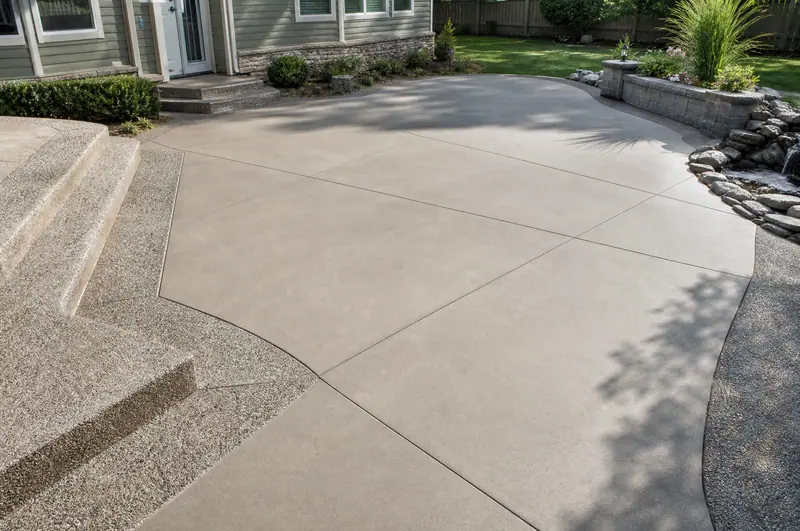
Concrete flatwork in Paso Robles performs best when it is planned with the rest of the property instead of poured on its own. As a C-27 landscape contractor, we build patios, walkways, steps and pads as one piece of a complete design-build landscape project.

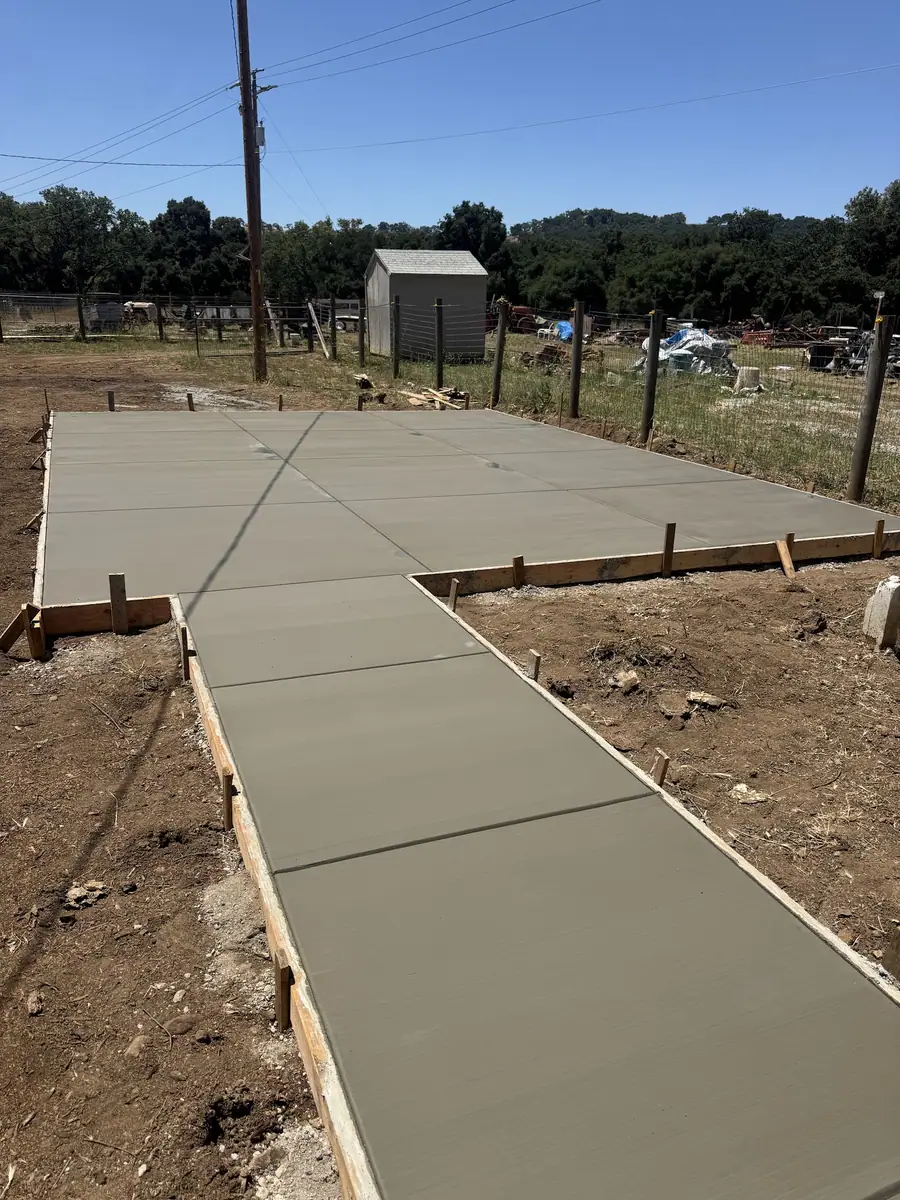

What flatwork covers in a whole-yard project
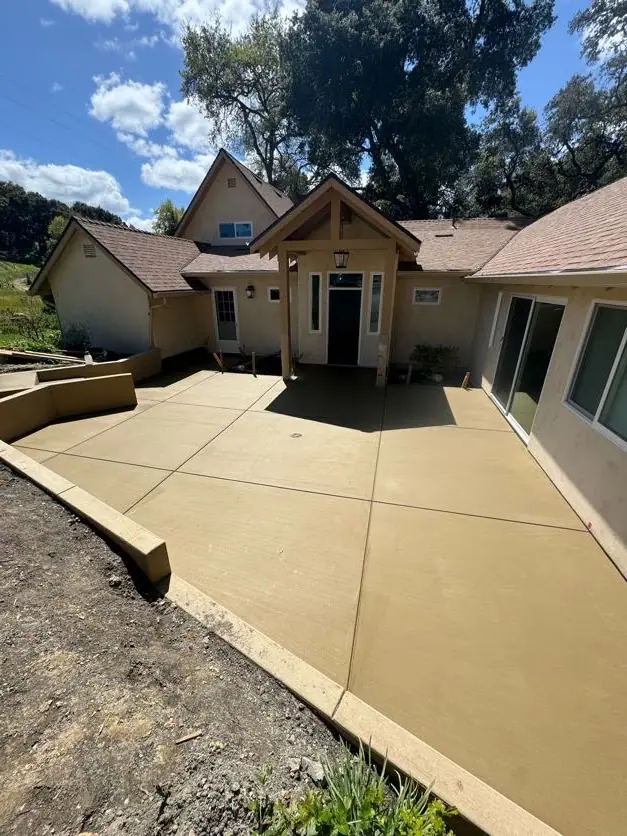
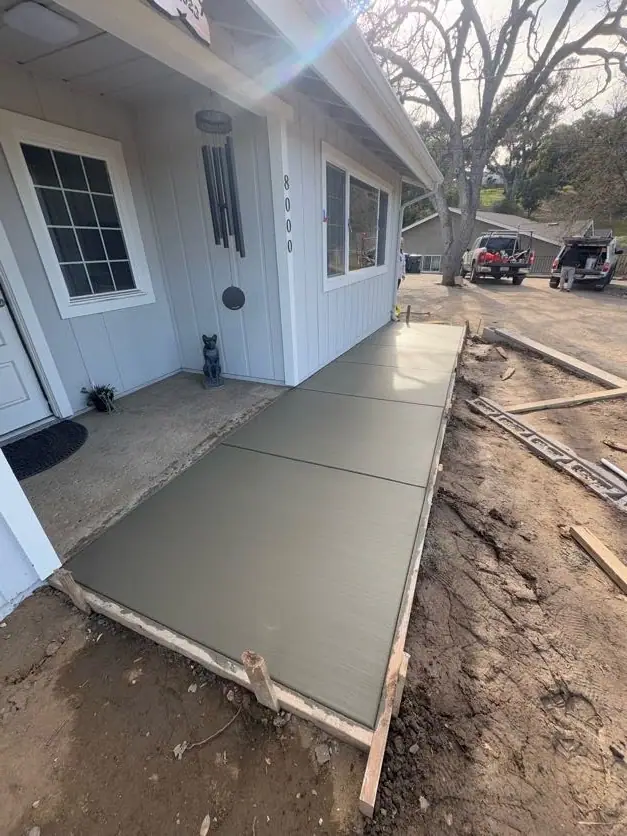
Flatwork means the level, poured surfaces that hold a property together: patios, garden walkways, entry landings, steps, equipment pads, and bands that frame pavers or planting beds. We build it when it belongs to an overall landscape plan, so layout, grades and finishes are decided alongside everything else on the site.
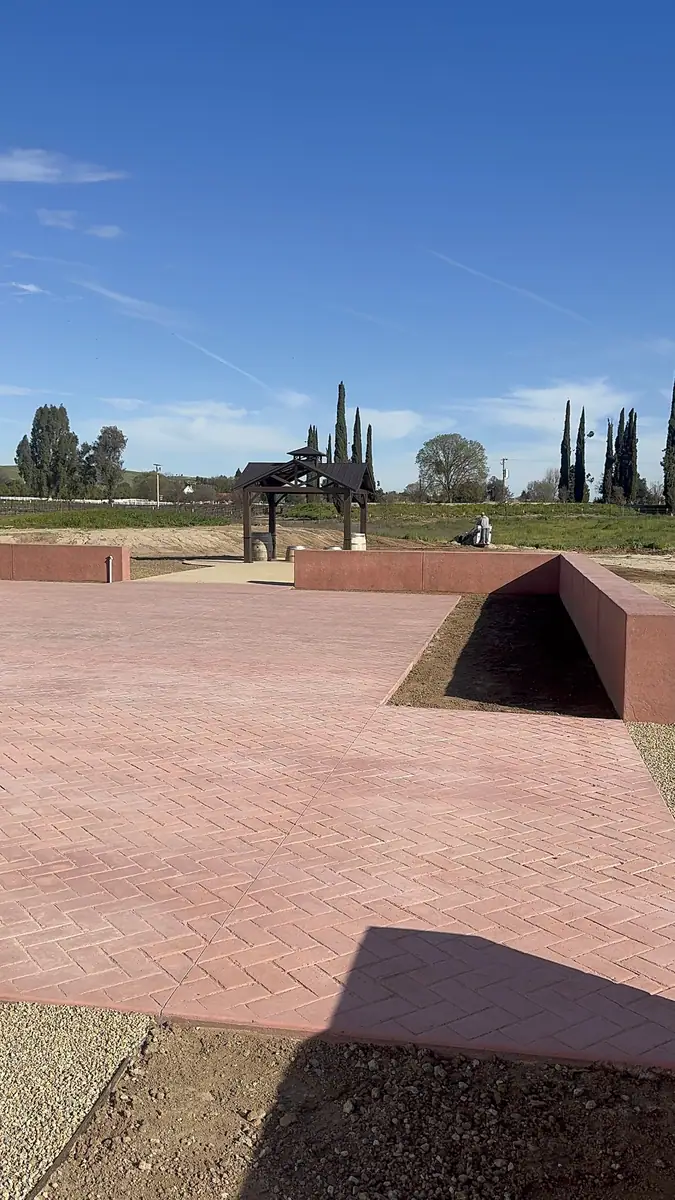
Concrete is often the practical choice for large, high-use areas. It pairs well with pavers and natural stone used as borders or accents where you want more texture.
Finishes and options for Central Coast conditions
Inland North County summers are hot, and a lighter surface typically holds less heat than a dark one. The finish you choose affects traction, glare, how dust and leaves show, and how the slab ages.
- Broom finish: simple, slip resistant and comfortable underfoot
- Exposed aggregate: textured, forgiving of wear and dust
- Integral or stained color: warm earth tones that suit oak woodland settings
- Saw-cut or formed joints: placed deliberately to guide where concrete cracks
Color and pattern are chosen against your home, existing stone and planting so the surface looks settled rather than added on.
Site prep, base and clay soil
Much of the Paso Robles area has clay-rich soil that swells when wet and shrinks when dry, so preparation matters more than the finish. We grade for drainage away from the house, remove unsuitable soil where needed, and compact a stable aggregate base before forms are set. Reinforcement and joint spacing are planned for the size of the slab and the soil beneath it.
Oak roots are a second consideration. We adjust layouts around mature trees, protect roots where we can, and keep grade changes away from trunks. If tree removal or major root work is under discussion, it is coordinated with licensed tree specialists.
How flatwork connects to the other features
Poured areas often become the footing for other parts of the yard. A pad can carry an outdoor kitchen base or a fire feature, and walkways link the front entry to patios and outdoor living spaces and gates.
Sleeves for irrigation and low-voltage lighting are set before pouring so nothing has to be cut out later. Gas, line-voltage electrical and plumbing connections are coordinated with licensed specialists within the project sequence.
Care and durability
Well prepared concrete is a long-lasting surface that asks for little. Sweeping and occasional rinsing keep it clean, and a penetrating sealer can help resist stains on many finishes. Hairline cracks can still appear in any slab, which is why joints are planned in advance.
Drainage is the best protection. Downspouts, planting beds and adjacent grades are set to keep water moving away from the edges of the slab.
How we plan a concrete project
We start with a site walk and a conversation about how you use the yard. From there we prepare a layout, review finishes and joint patterns, and confirm grades and drainage. When a project needs HOA review or permits, we help prepare documentation and coordinate, though approvals are never guaranteed. The full sequence is on our process page.
Frequently asked questions
Do you pour concrete as a stand-alone job?
Our concrete work is part of a larger landscape project, tied to grading, drainage, planting and other features. If you only need a single slab, we would talk through whether a whole-yard approach fits your goals. Contact us and we can review your site together.
How do you reduce cracking?
No slab is crack-proof, but cracking is managed through base preparation, reinforcement, thickness suited to the use, and control joints at planned intervals. Drainage matters too. We discuss realistic expectations, including that fine cracks can follow joints over time.
Can concrete be combined with pavers or stone?
Yes. Many designs use concrete for large areas with pavers, flagstone or contrasting bands for borders and accents. That keeps the yard cohesive and adds texture where you notice it most.
Is concrete a good choice in hot weather?
It handles heat well, although dark surfaces can feel warm underfoot. Lighter tones, textured finishes and shade from trees or structures help. Summer placement and curing need extra care, so we plan pours around conditions.