
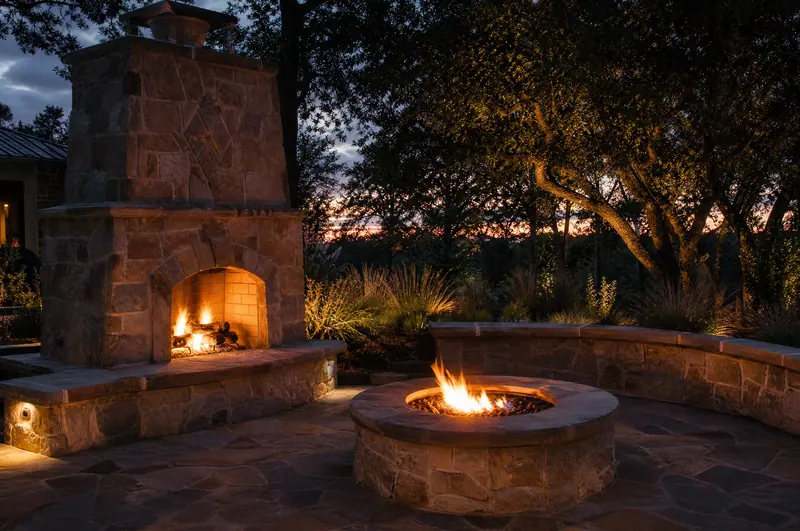
A fire pit or outdoor fireplace gives a yard a center of gravity, extending the evenings well past sunset when the Central Coast cools off. Santiago's designs and builds fire features in Paso Robles and across San Luis Obispo County as part of a whole-yard plan, constructing the masonry and surrounding patio while coordinating gas and other utilities with licensed specialists.

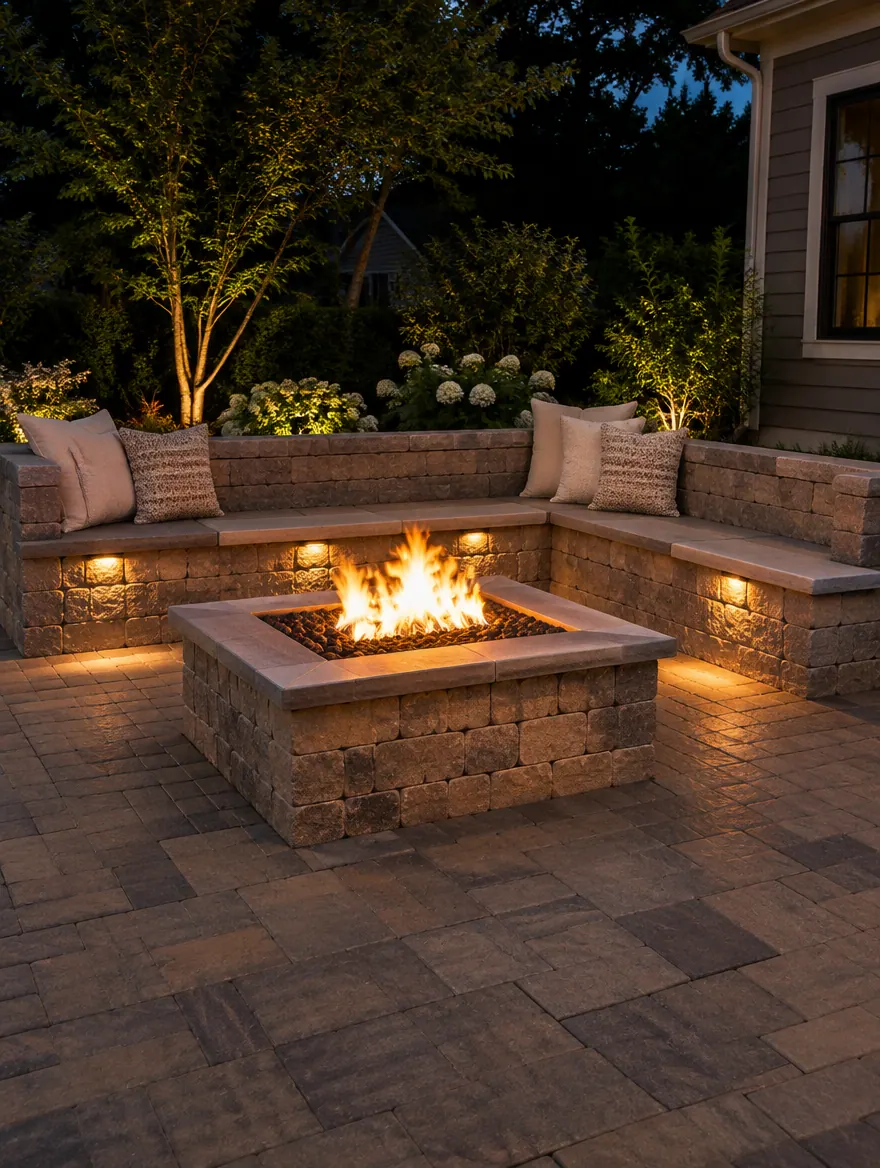
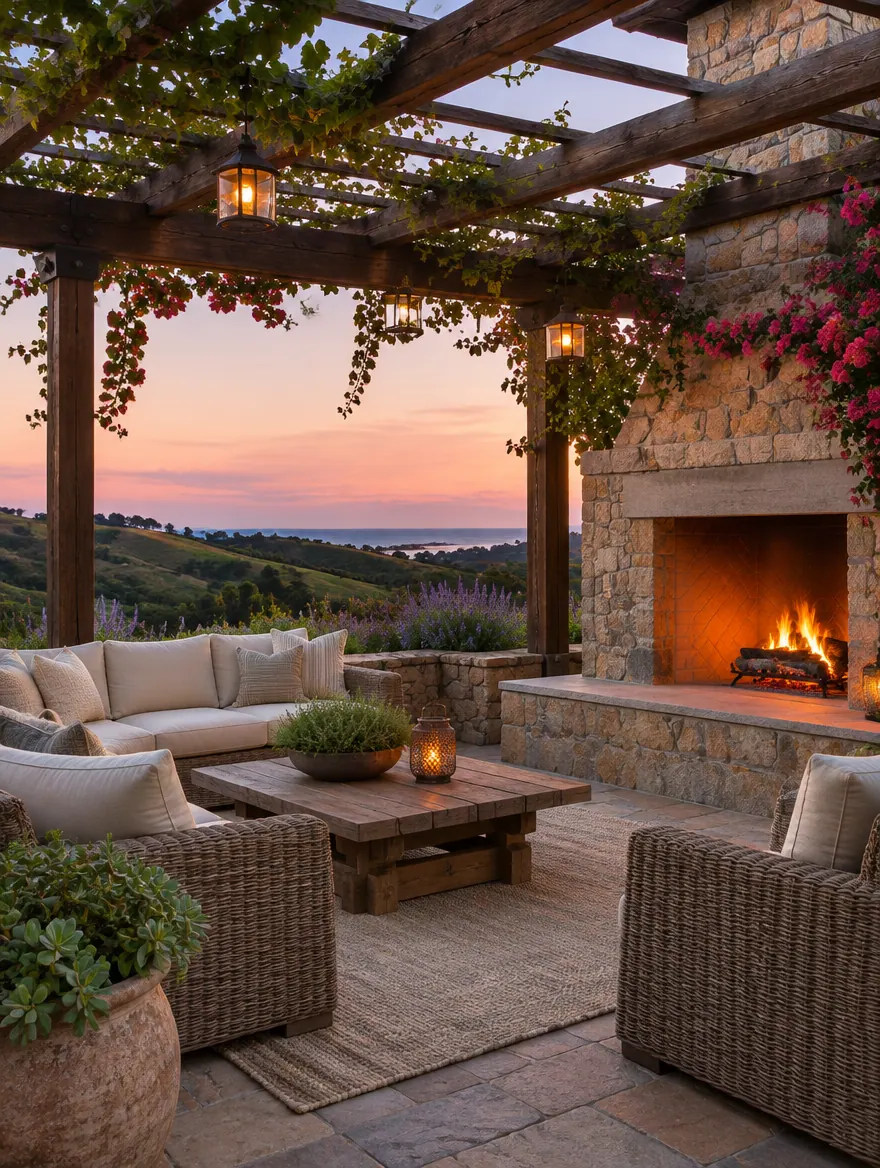
What a fire feature project includes
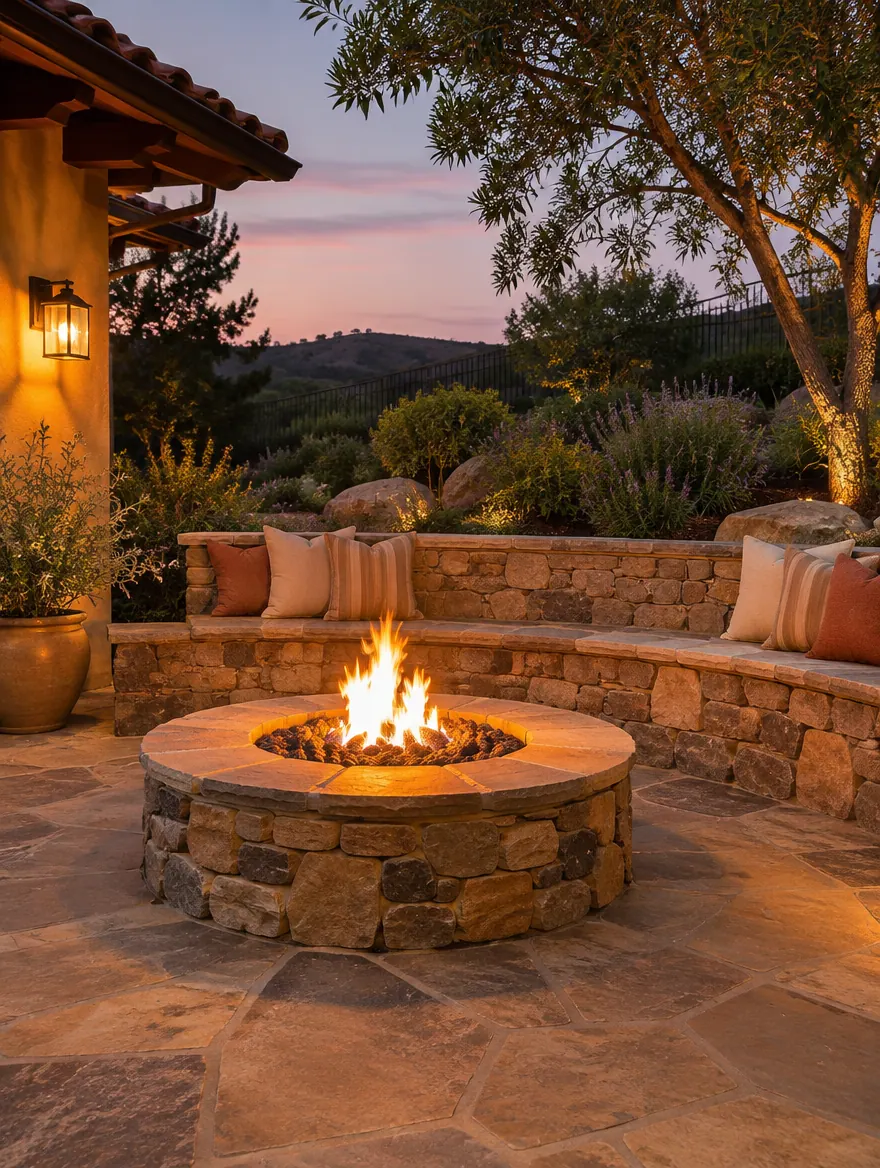
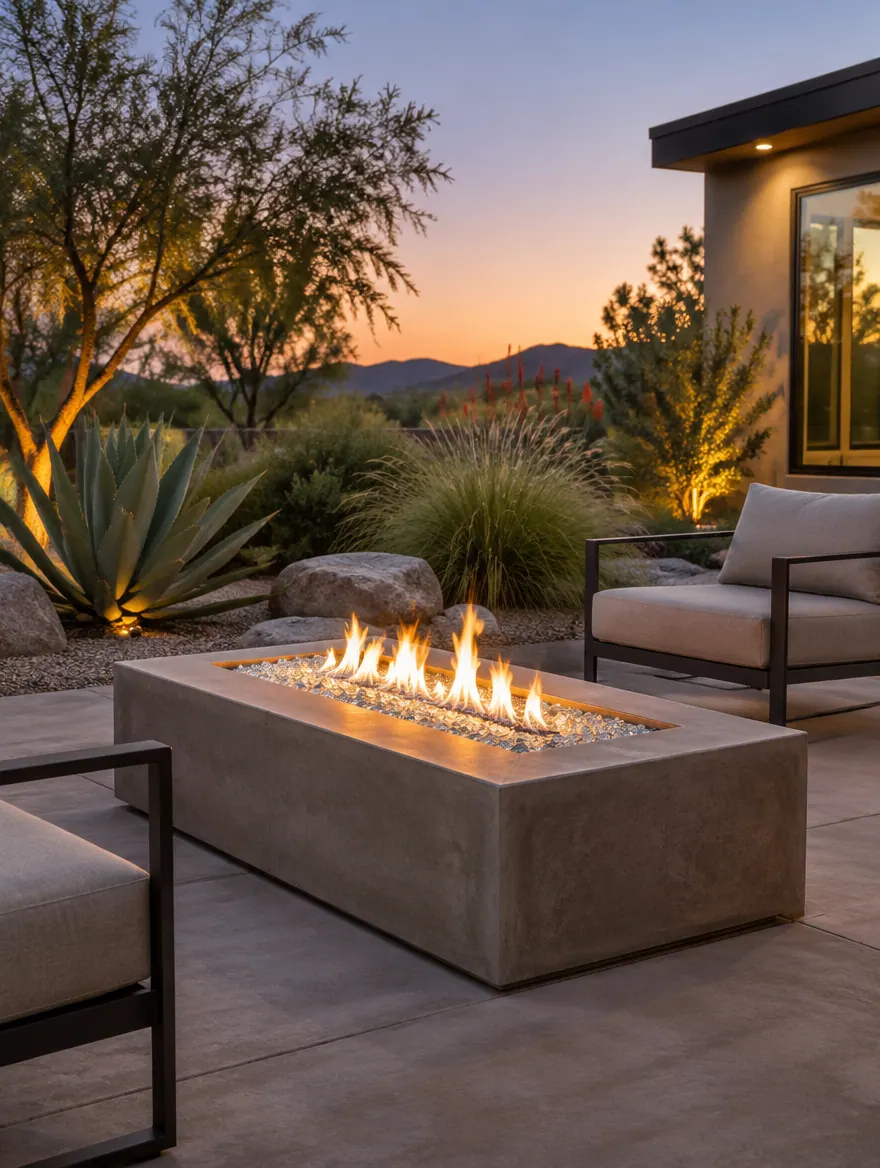
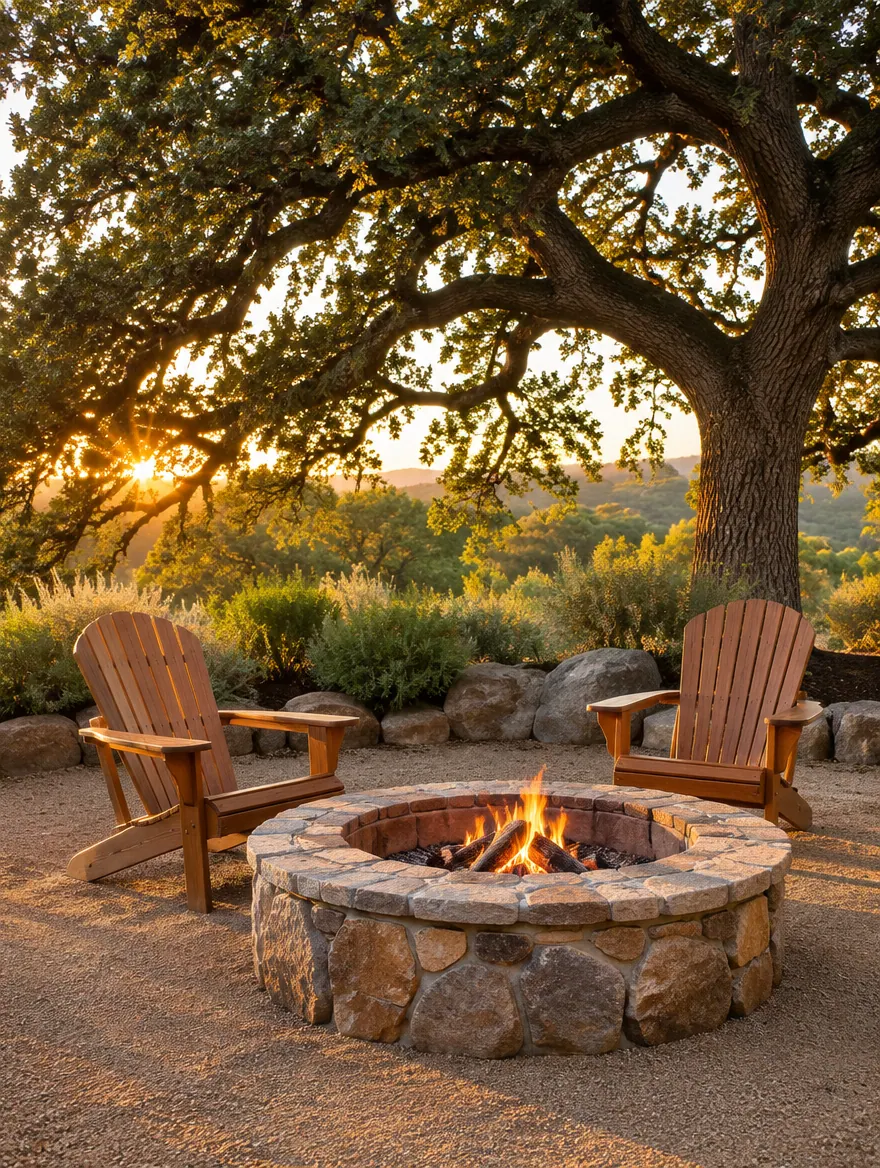
Fire features come in several forms: a wood-burning or gas fire pit, a linear fire table, a freestanding outdoor fireplace, or a fireplace integrated into a wall or seating terrace. We help you choose based on how you want to gather, how many people it should serve and how much upkeep you want. Our article on fire pit versus outdoor fireplace compares the main options.
We design the surrounding seating zone, build the masonry structure and finishes, and prepare the base and paving so the whole area feels intentional. Gas supply lines, igniters and any line-voltage components are installed by licensed specialists, whom we coordinate with so the routes are planned before the masonry is built.
- Fire pit, fire table or fireplace designed around seating and sightlines
- Masonry structure, veneer, caps and hearth surfaces
- Compacted base, non-combustible paving and drainage
- Built-in seat walls, planting and low-voltage lighting
- Gas and electrical hookups coordinated with licensed trades
Materials and design that suit local landscapes
Natural stone veneer, cut stone caps, brick and stucco are all well suited to fire features, and the right choice depends on the architecture of your home and the landscape beyond it. Warm-toned stone looks natural against golden grasses and oak silhouettes, while smooth, modern finishes suit contemporary houses.
Inside the fire pit, firebrick and steel liners protect the structure from heat. We discuss fuel options openly: wood has the classic smell and crackle, while gas is cleaner, easier to start and often more practical in dry months when wood burning may be restricted. Restrictions can change by season and location, so it is wise to check local rules before choosing.
Site prep, base and drainage
Heat and weight call for a solid foundation. We excavate and build a compacted base suited to your soil, whether that is clay that expands when wet or granular decomposed granite. Non-combustible surfaces such as stone, pavers or concrete are used under and around the fire area, and we avoid placing a fire feature over roots or on sloped ground where embers could roll.
Drainage is planned so water does not pool in the pit or around seating. Weep paths and gentle grading keep winter rain from collecting, which protects both masonry and gas components.
Placement, clearances and fire safety
Fire safety is central in a region of dry summers and golden grass. We place fire features with generous clearance from the house, fences, overhanging oak limbs and dry vegetation, and we think about prevailing afternoon wind so smoke and embers move away from seating and structures. Planting near the fire area is chosen and spaced with defensible space principles in mind.
Local fire agencies and county rules may govern where and how fire features may be used, and conditions can change with weather and season. We encourage homeowners to follow local guidance, keep a water source or extinguisher nearby, and never leave a fire unattended.
Permits, HOA and working with other features
Permanent fireplaces, gas lines and anything with a chimney or roof may involve permits or HOA review. We cannot promise approvals, but we prepare drawings and documentation and coordinate the submittal with you and the specialists. See our article on HOA and permits for common questions.
A fire feature often shares space with an outdoor kitchen or a water feature, and planning them together saves rework. We also handle the lighting that makes the area safe and inviting after dark.
Care, durability and how we plan it
Masonry fire features are long lasting. Wood-burning pits need periodic ash removal and a look at the liner, and gas units benefit from regular inspection by a qualified technician. Covers protect burners and caps from winter weather.
We begin with a consultation at your property, move into a design that shows layout, materials and seating, and then build in a clear sequence. Learn more about how we work on our process page, or reach out to start planning.
Seating deserves as much attention as the fire itself. We typically plan comfortable distances from the flame, wide enough paths to walk around the area, and a view that does not point guests into the smoke. Built-in seat walls, movable chairs or a mix of both each change how the space feels, and we review them with you in the design stage so the finished gathering area works for conversation as well as warmth.
Frequently asked questions
Should I choose a fire pit or an outdoor fireplace?
A fire pit is open, social and flexible, while a fireplace gives wind protection, a focal wall and a more formal look. The right choice depends on space, how you gather and the style of your home. We walk through both at the consultation.
Is gas or wood better in this climate?
Wood offers the classic experience, but burning can be restricted during dry periods, and smoke and embers are a concern. Gas is cleaner and easier to control, but needs a licensed specialist for the supply line. We discuss both and the local rules.
How far should a fire feature be from the house and trees?
Clearances depend on the type of feature, the structures nearby and local guidance. We place fire areas well away from walls, fences, overhanging limbs and dry plants, and we consider wind direction. We follow manufacturer and local requirements.
Do you handle the gas line?
We build the masonry, base and paving. Gas lines, igniters and any line-voltage work are installed by licensed specialists whom we coordinate, so the routes are planned before the structure is built.
Does a fire pit need a permit?
It depends on the jurisdiction and the type. Permanent fireplaces, gas connections and chimneys commonly require review, and HOAs may have rules. We help prepare documentation and coordinate, though approval belongs to the reviewing agency.