
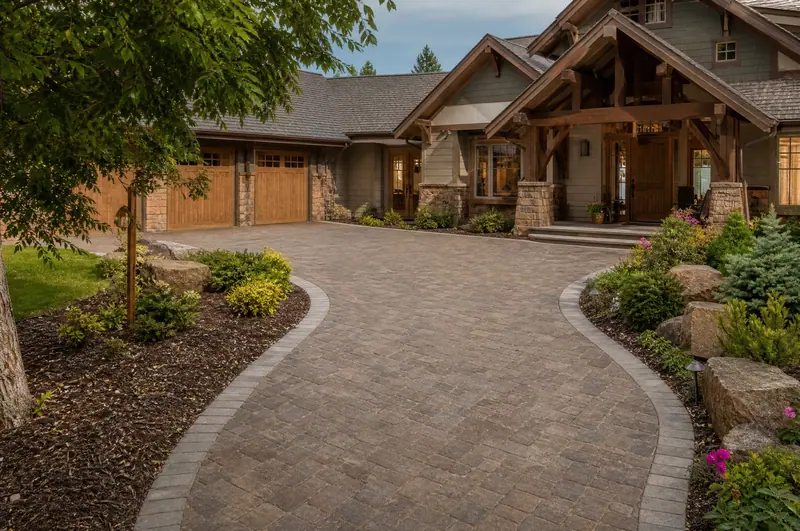
Paths and driveways are the parts of a landscape you use every day, and they only look good for years if they are built on the right base. Santiago's designs and installs pavers, natural stone walkways and paver driveways in Paso Robles and across San Luis Obispo County as part of a whole-yard project, so the surfaces connect cleanly to your patio, planting and lighting.
What a paving project includes
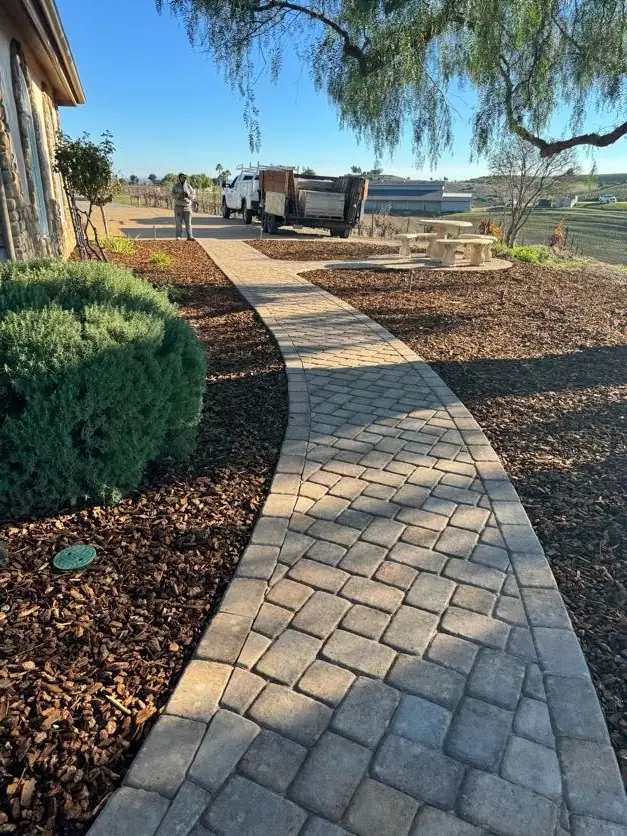
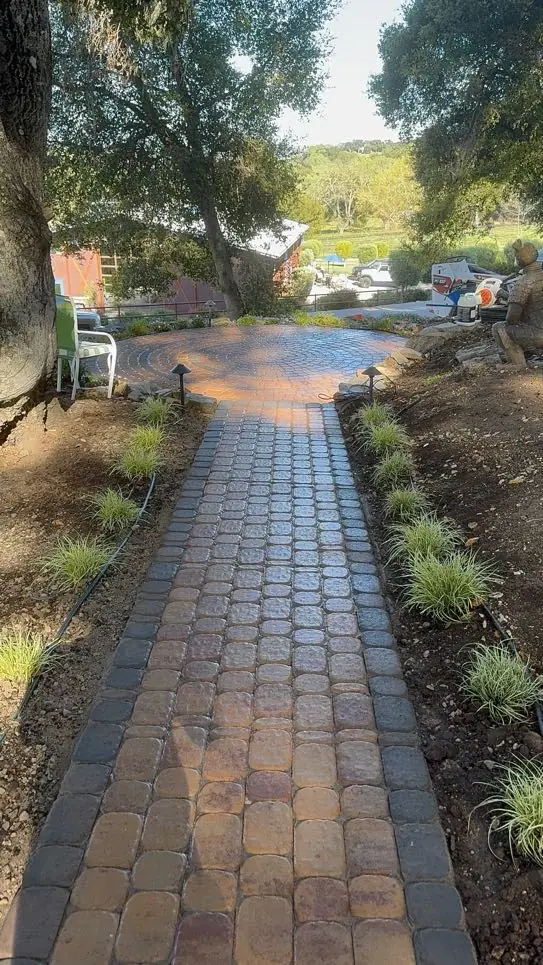
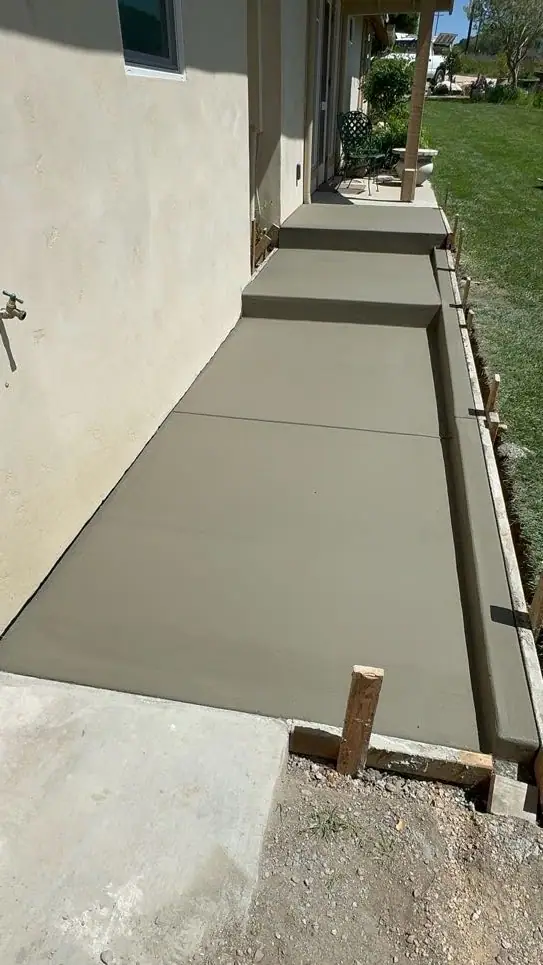
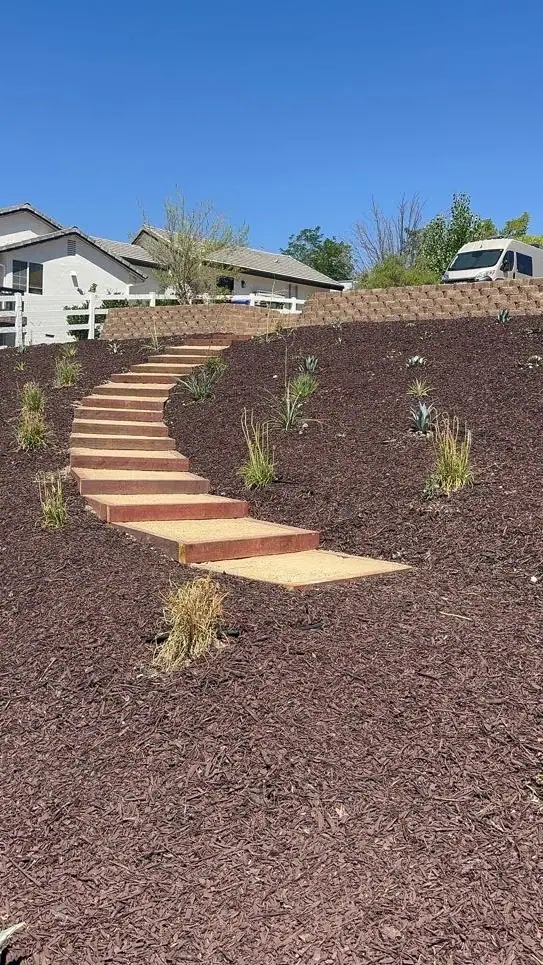
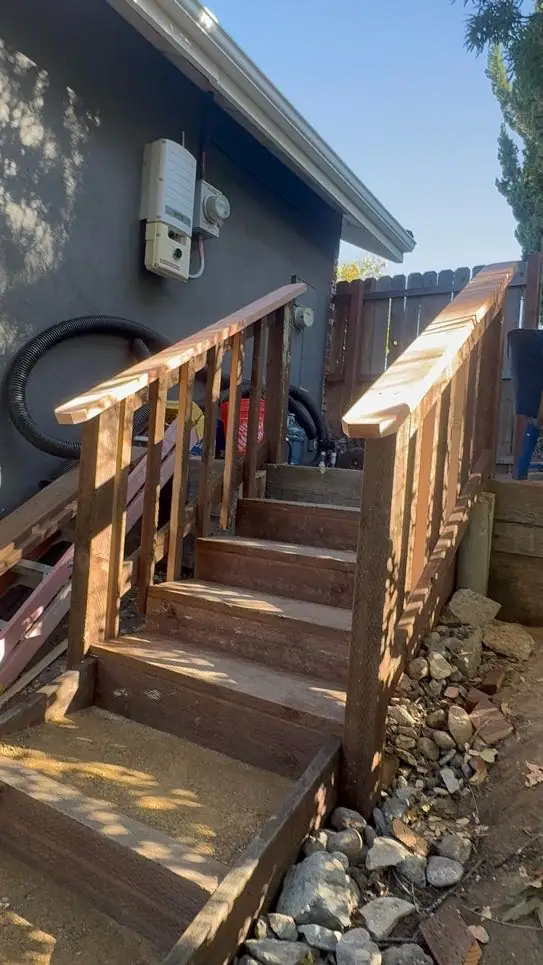
Paving projects cover entry walks, garden paths, steps, side-yard passages, driveway aprons, full driveways and the courtyards that connect them. We begin by looking at how you move through the property: where you park, how guests arrive, how water runs and where the eye should be drawn.
A design-build project includes layout, excavation, a compacted aggregate base, edge restraints, laying and cutting the surface, jointing and finishing. We coordinate grading and drainage with the paving so the surface is not only attractive but also slopes correctly and keeps water away from the house.
- Layout of walks, steps, courtyards and driveways
- Excavation, compacted base and edge restraints
- Concrete pavers, natural stone or flagstone surfaces
- Drainage, grading and transitions to planting and lawn
- Lighting and planting along the route
Materials and patterns for Central Coast homes
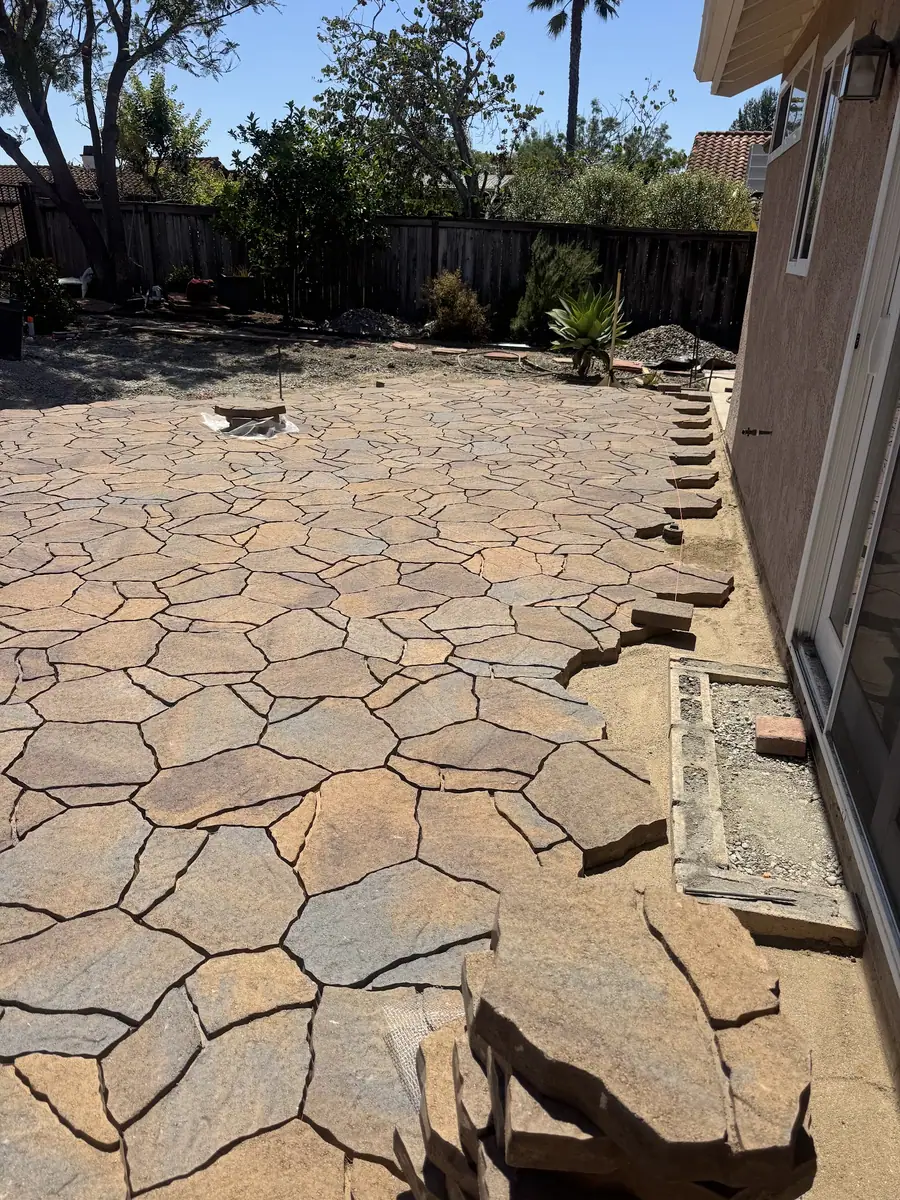
Concrete pavers come in many sizes, textures and colors, and they are easy to repair because individual units can be lifted and reset. Natural flagstone and cut stone suit garden paths and entries, with irregular or squared patterns that fit the style of the home. For driveways, thicker pavers and tighter patterns carry vehicle loads better. Color choice also affects how the paving relates to the house, so we compare options beside your siding, roofline and existing stone before anything is ordered.
In sun-baked regions, lighter and mid-tone colors tend to stay cooler underfoot and fade less visibly than dark ones. Texture matters for safety, especially on steps and slopes where winter rain can make a surface slick. Our comparison of patio materials discusses these trade-offs, and we bring samples to your consultation.
Base, soils and drainage
The base is what keeps pavers flat. We remove unsuitable soil, add layers of compacted aggregate and finish with a bedding layer, with the depth set by the soil and the load. A walkway needs less depth than a driveway that carries cars and delivery trucks. Without a solid base, pavers sink, ruts form and joints open.
Soils here vary. Clay expands and contracts with moisture, so it demands good drainage and a well-built base, while decomposed granite compacts well when handled properly. We slope surfaces away from the house, plan drains where water would otherwise pool, and consider permeable options where infiltration is helpful. Good drainage reduces weeds, staining and settling.
Driveways, access and how it fits with other work
A paver driveway is a major visual piece of the property and a heavily used surface, so planning matters. We consider vehicle turning, slope, apron connection to the street and the transition to garage and walkways. Where a driveway meets a public right-of-way, local rules and encroachment requirements may apply.
Pavers often combine with concrete flatwork for large areas, with stone retaining walls on sloped lots, and with irrigation and lighting running beside the path. Because we plan these together, trenches and sleeves for future lines go in before the surface does.
Permits, HOA and specialist coordination
Many walkways and patios need little review, but driveways, work near the street, grading changes and structures can involve permits, and HOAs often have rules about materials and colors. We cannot promise approvals, but we help prepare documentation and coordinate the submittal. Our article on HOA and permits covers what homeowners commonly encounter.
Where a project involves electrical, plumbing, gas or engineered structures, we coordinate licensed specialists so their work is complete before the final surface is placed. This avoids cutting into new paving later.
Care, durability and how we plan it
Pavers are durable and forgiving. Sweep or rinse periodically, refill joint sand when needed, treat weeds early and reseal only if the material and look call for it. If a section ever settles, it can be lifted and reset, a real advantage over a cracked slab. Because the base and drainage are built correctly from the start, there is rarely a need for more than light seasonal attention.
We start with a consultation at your property, develop a plan with layout, materials and drainage, and build in a clear sequence with regular communication. See our process page for details, or contact us to arrange a visit.
Edges and transitions deserve care. A clean border, a soldier course or a stone band can frame a paved area and keep pavers locked in place, while thoughtful steps and landings make slopes comfortable to walk. We also consider how the surface meets the house, the garage and the street so the lines look intentional and water has somewhere to go instead of settling against a foundation.
Frequently asked questions
Are pavers better than poured concrete for a driveway?
Each has strengths. Pavers can be repaired by lifting and resetting individual units and offer more design variety, while poured concrete is continuous and quick to place. The right choice depends on style, use and budget priorities. We can combine both.
How deep should the base be under pavers?
It depends on the soil and the load. A garden walkway needs less depth than a driveway that carries vehicles. We set the base depth for the conditions and compact it in layers, since the base is what keeps the surface flat.
Will weeds grow between pavers?
Some can, as seeds land in the joints. A well-built base, tight joints, jointing material and periodic sweeping and early weeding keep it under control, and we discuss options during design.
Can pavers be installed over existing concrete?
Sometimes, if the slab is sound, level and drains properly. In many cases it is better to remove the old surface and build a proper base. We assess your site and recommend an approach.
Do I need a permit to replace a driveway?
It depends on the jurisdiction and whether work touches the street, drainage or structures. HOAs may have rules too. We help prepare documentation and coordinate, though approval belongs to the reviewing agency.